
The 5 Pillars of Dog Wellness: Understanding the R.E.A.C.H. Framework
Many common dog behavior problems, including anxiety, reactivity, and destructive behavior, are influenced by a dog’s overall wellness. Training is important, but it’s only one piece of the puzzle. When we zoom out and consider the whole dog, we often discover that behavior improves naturally when their needs are more fully met.
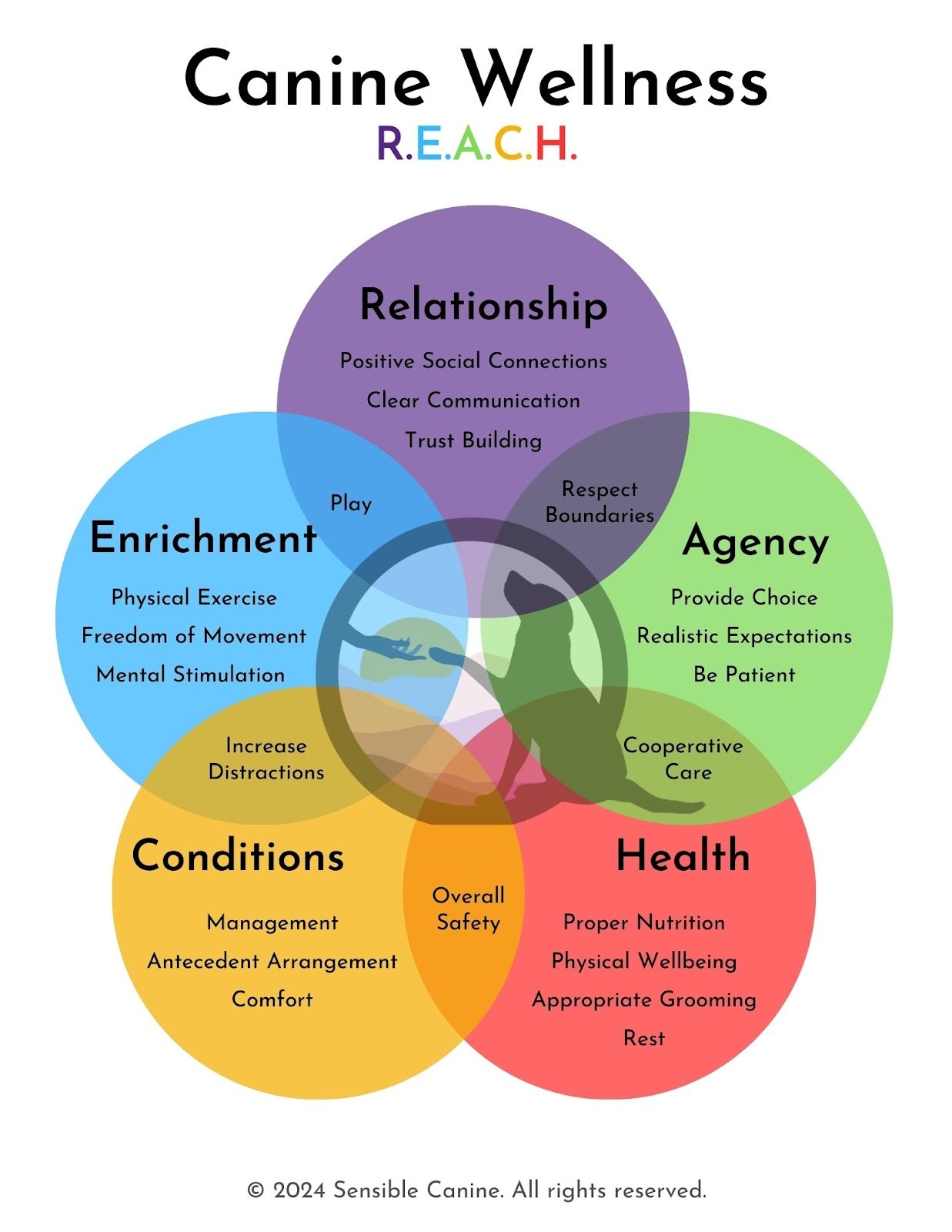
At Sensible Canine, we think about dog wellness through five interconnected areas that form the R.E.A.C.H. framework: Relationship, Enrichment, Agency, Conditions, and Health. When these five pillars are supported, dogs are better able to learn, regulate their emotions, and navigate the world with confidence.
Relationship: Building Trust With Your Dog
We bring dogs into our homes seeking companionship, but companionship is a two-way street. When we intentionally nurture the relationship with our dogs, many other pieces of the wellness puzzle begin to fall into place.
Dogs don’t speak our language, yet they are constantly trying to understand us. They observe our movements, tone of voice, routines, and patterns, offering behaviors in an attempt to predict how we might respond. By providing clear cues and consistent responses, we help our dogs better understand their environment and feel more secure within it.
A helpful concept shared by trainers like Susan Friedman and Steve Martin is the idea of a “trust account.” (Click Here to see more from their article; The Power Of Trust). Much like a financial account, the goal is to make far more deposits than withdrawals. Every positive interaction; whether it’s play, reinforcement, or simply respecting your dog’s communication; adds to that balance.
When we consistently build trust, our relationship becomes rooted in safety, predictability, and confidence.
Enrichment: Meeting Your Dog’s Mental and Behavioral Needs
Our dogs are essentially captive animals, much like the animals we visit in zoos and aquariums. While they live comfortable lives in our homes, their environments often lack many of the natural opportunities to explore, problem-solve, and engage in instinctive behaviors.
Because of this, enrichment for dogs is not just a luxury… It’s a necessity.
Enrichment goes far beyond a daily walk around the neighborhood. While walks are valuable, dogs also need opportunities to think, explore, and engage their brains in different ways. Mental stimulation is a MUST!
Examples of dog enrichment ideas include:
- Food puzzles and stuffed Kongs
- Snuffle mats or scent games
- Lick mats or frozen treats
- Training sessions that encourage learning
- Play and interactive games
- Safe opportunities for exploration and freedom of movement
When your dog’s enrichment and mental stimulation becomes a regular part of daily life rather than an occasional activity, we often see improvements in dog behavior that include; focus, emotional regulation, and overall confidence.
Agency: Giving Dogs Choice and Control
Just like humans, dogs often feel more comfortable when they are given choices rather than being forced into situations that make them uneasy.
Agency means allowing dogs safe, appropriate opportunities to make decisions.
When encountering something unfamiliar, allowing a dog to approach at their own pace can help build confidence and reduce stress. This concept is especially valuable during grooming and husbandry procedures such as nail trims, brushing, bathing or veterinary care.
Teaching dogs to become willing participants in these routines; often referred to as cooperative care; can dramatically reduce anxiety and improve long-term trust. You can read more about cooperative care on the IAABC foundation website here.
When dogs feel that their communication is respected and their choices matter, their confidence and resilience tend to grow. Working with Fear Free Certified trainers at Sensible Canine, you and your dog can learn how to cooperatively move through everyday life and tasks without force. See our private training services here.
Conditions: Setting the Environment Up for Success
Dog behavior doesn’t happen in a vacuum. It happens within an environment that is constantly influencing the choices our dogs make. Conditions refer to how the environment around the dog is structured.
Oftentimes, small environmental adjustments can make a significant difference in behavior. Trainers refer to this as antecedent arrangement, meaning we adjust the environment to make desired behaviors an easier choice and undesirable behaviors less likely.
Examples of helpful management strategies might include:
- Using baby gates to prevent unwanted access
- Crates or safe spaces for rest and decompression
- Leashes or long lines for safety
- Muzzles when appropriate
- Adjusting stimulation levels in the environment
Comfort also plays an important role. A dog that is overwhelmed by noise, stimulation, or lack of rest will have a much harder time learning or regulating their emotions (think of a cranky toddler on a day full of stimulation and little rest). We can improve dog behavior by influencing the environment around them.
When we thoughtfully adjust our dog’s environment, we often reduce frustration for both the dog and the humans. Canine wellness is contingent on a suitable environment that inspires good behavior.
Health: The Physical Foundation of Behavior
We’ve all experienced how physical discomfort can influence our mood, patience, or ability to focus. A poor night’s sleep, illness, or chronic discomfort can affect how we respond to everyday challenges. Dogs are no different, and a dog’s wellness is heavily influenced by what’s physically happening with their body.
Physical health and behavior are deeply connected. Factors such as nutrition, pain, allergies, digestive issues, grooming needs, and sleep quality can all influence how a dog behaves and feels.
A commonly overlooked factor is sleep. Dogs require significant amounts of uninterrupted rest to regulate their nervous systems and process their daily experiences. Without adequate rest, many dogs struggle with irritability, stress, and difficulty learning.
When we prioritize a dog’s physical wellbeing, we support emotional stability, resilience, and long-term behavioral success.
Reaching Better Dog Wellness
When we look at dog behavior through the lens of the R.E.A.C.H. framework; Relationship, Enrichment, Agency, Conditions, and Health; we begin to see the full picture of what supports a thriving dog.
By considering these five areas in our daily interactions with our canine companions, we can support not only better behavior but also deeper trust, improved wellbeing, and a more fulfilling relationship.
When we zoom out and consider the whole dog, positive change often follows naturally.
At Sensible Canine, we incorporate the R.E.A.C.H. wellness framework into our philosophy and our group and private dog training programs. By looking beyond surface-level behavior and considering the full picture of a dog’s needs, we help dogs and their owners build more confident, peaceful relationships. Whether working with a puppy to develop a healthy lifestyle and good behavior or helping clients with dog behavior issues that have escalated over time, considering all aspects of wellness in our work vastly increases the positive influence and behavior changes that our dog and human clients experience. Click here for more info on our services, here for more information on our philosophy or here to schedule a free 15 minute phone call. We can’t wait to hear from you!
Common Questions About Dog Wellness
What does a dog need for good overall wellness?
A dog’s overall wellness includes more than exercise and food. Dogs thrive when five core needs are supported: a strong relationship with their owner, mental enrichment, opportunities for choice and agency, supportive environmental conditions, and good physical health. When these needs are met, dogs are better able to learn, regulate emotions, and navigate their environment.
Can lack of enrichment cause behavior problems in dogs?
Yes. Dogs that lack mental stimulation and opportunities to engage in natural behaviors often develop frustration, anxiety, or destructive habits. Enrichment activities such as scent games, puzzle toys, training, and exploration help meet these needs and can significantly improve behavior.
Why does my dog behave worse when they are tired or stressed?
Just like humans, dogs have a harder time regulating their emotions when they are physically uncomfortable, stressed, or sleep deprived. Health, rest, and environmental stressors all influence behavior and learning ability.